Day 9: Mitta Mitta to Cowra
5 February 2020
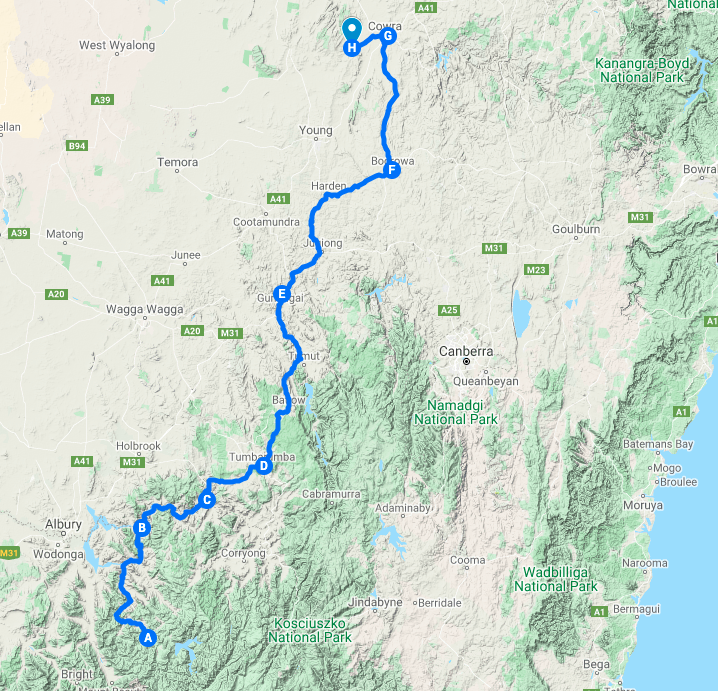
Being in no great hurry I took advantage of the free breakfast at the hotel and the chance to have a good talk with my wife. Eventually, I loaded the bike, refuelled at one of Australia's seriously expensive petrol bowsers ($1.80 / litre compared with an average of $1.51 / litre for the trip) and set off for the north. My plan was to head to Canberra for the night and catch up with an old friend.
I left the Omeo Valley headed for Jingellic which had been threatened by the fires. The further I got, the worse the smoke became. It was like driving in a fog, although a great deal hotter. Lake Hume, man-made as a result of damming the Murray River was extraordinarily low and everywhere there was evidence of fire.
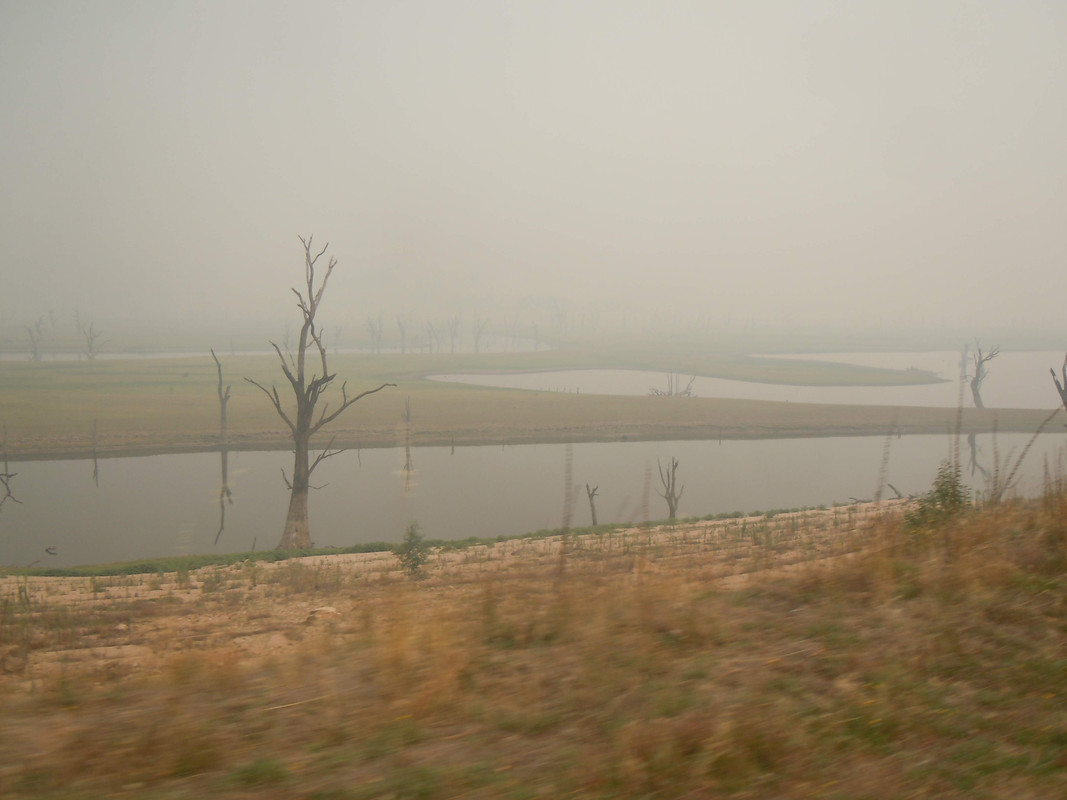
Lake Hume in the smoke
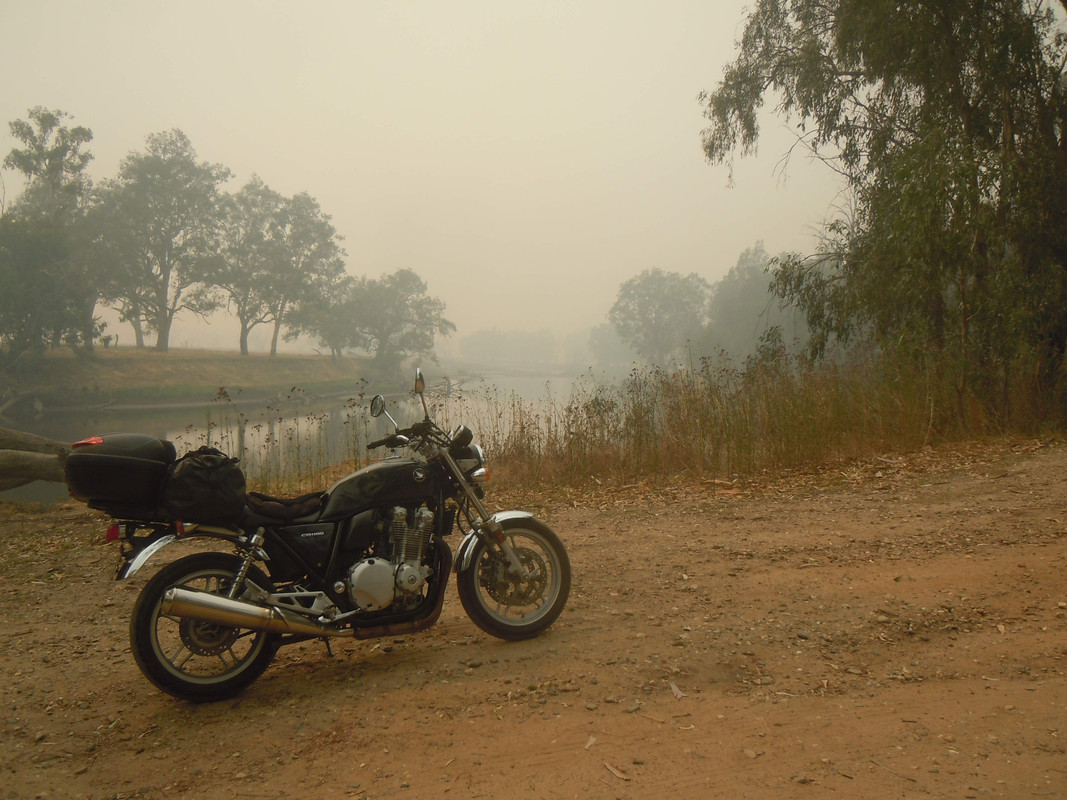
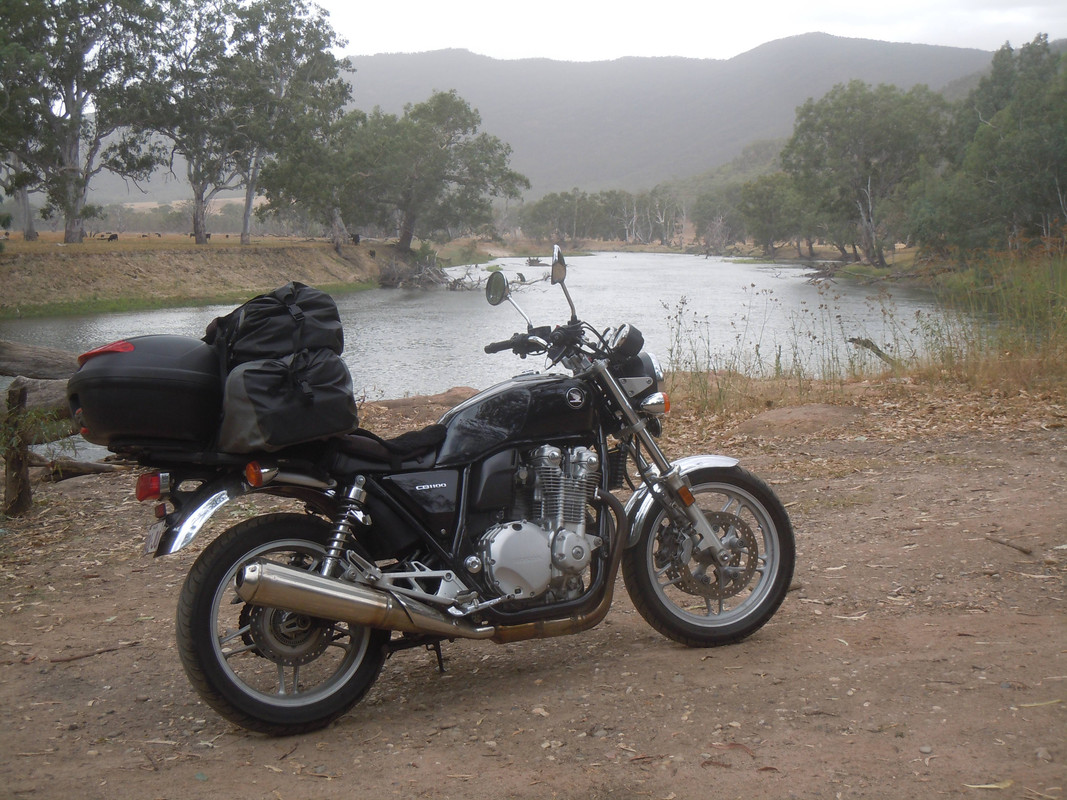
The CB and the Murray River from about the same spot. The top picture was taken in 2020; the bottom in 2019.
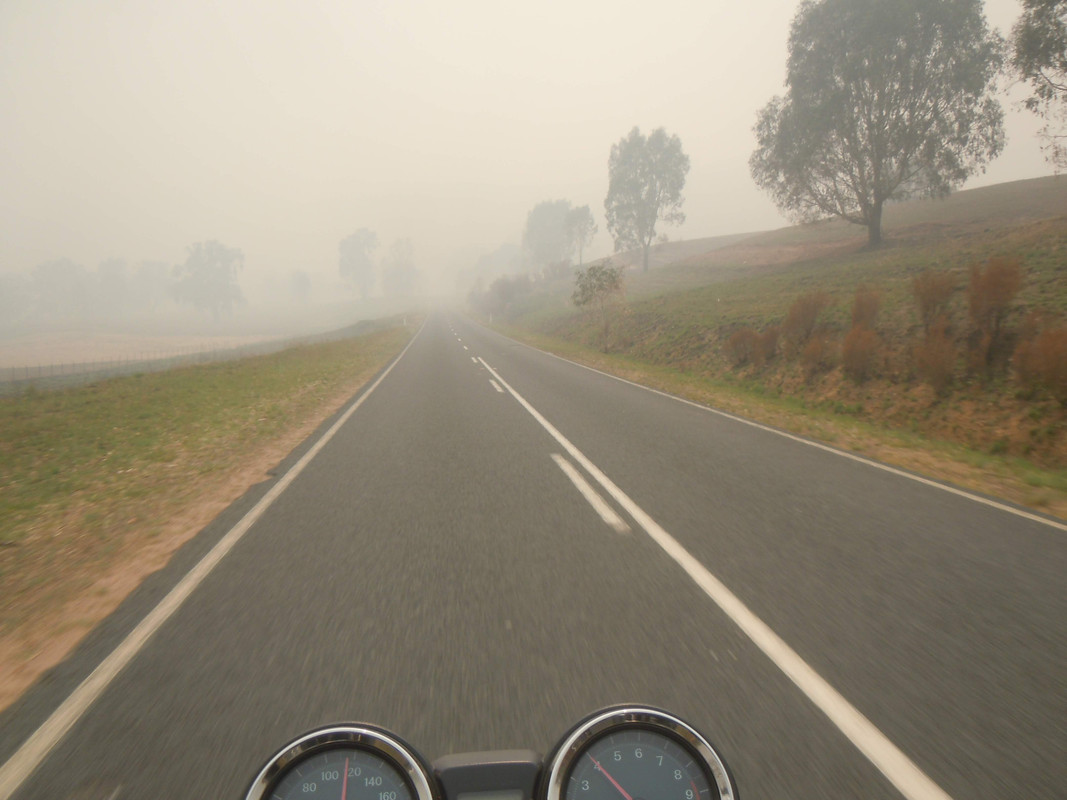
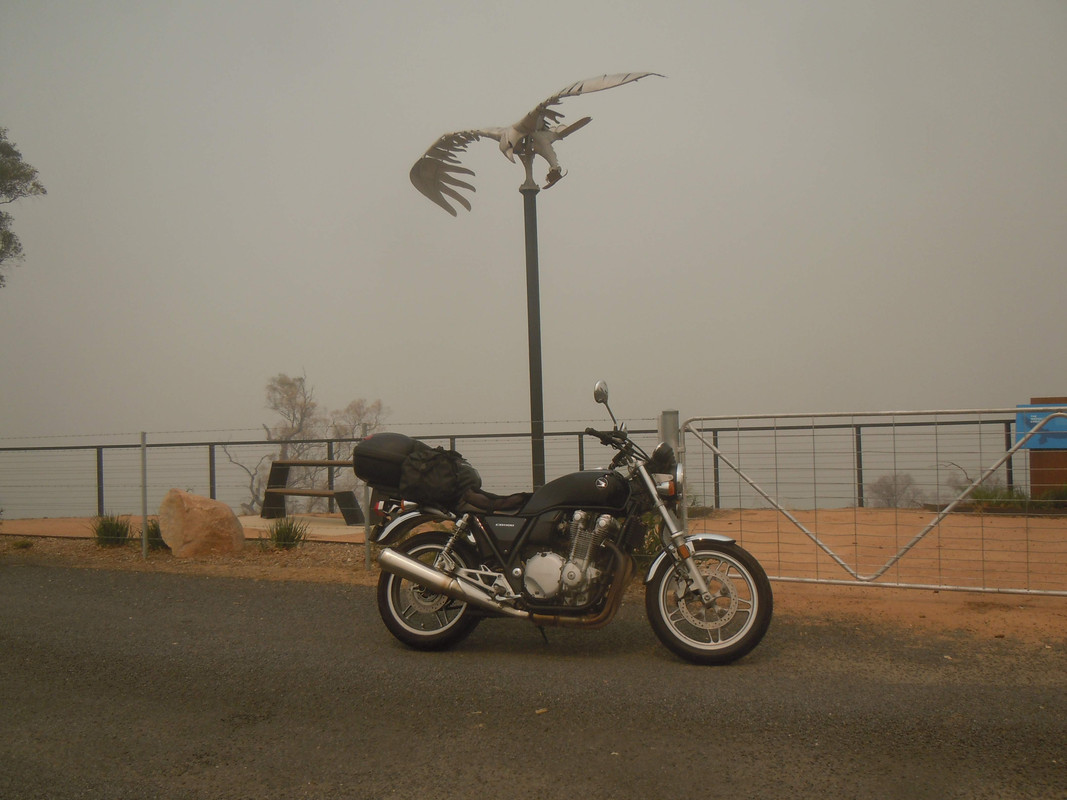
Along the Murray Valley Highway
By the time I got to Jingellic, where I stopped for coffee and water, the smoke was really thick. I checked the state of the fires and the roads and decided Canberra was worth missing. There was a bad fire south of the city; the smoke haze was dreadful and I'd be committed to a long, long stretch on the highway to get there. I sent a message to my mate and decided to head further west to call on my sister in law and her husband near Cowra.
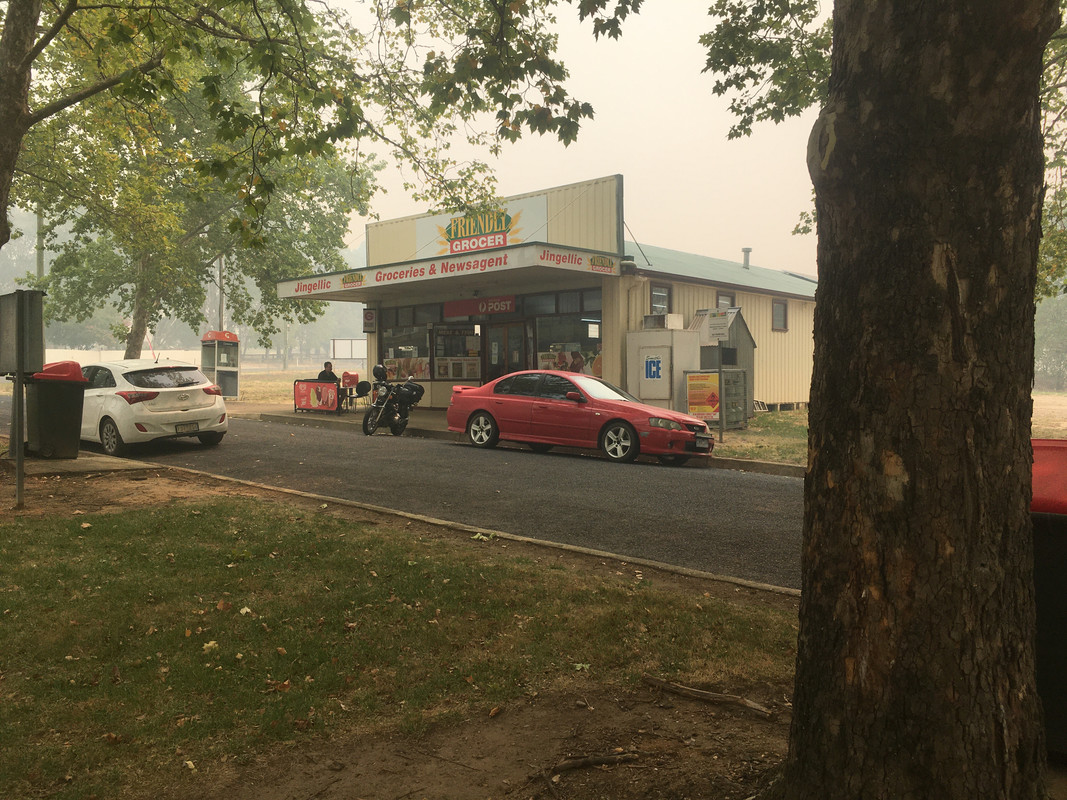
By the time I left Jingellic a nicely set up Kawasaki RS900 had appeared.
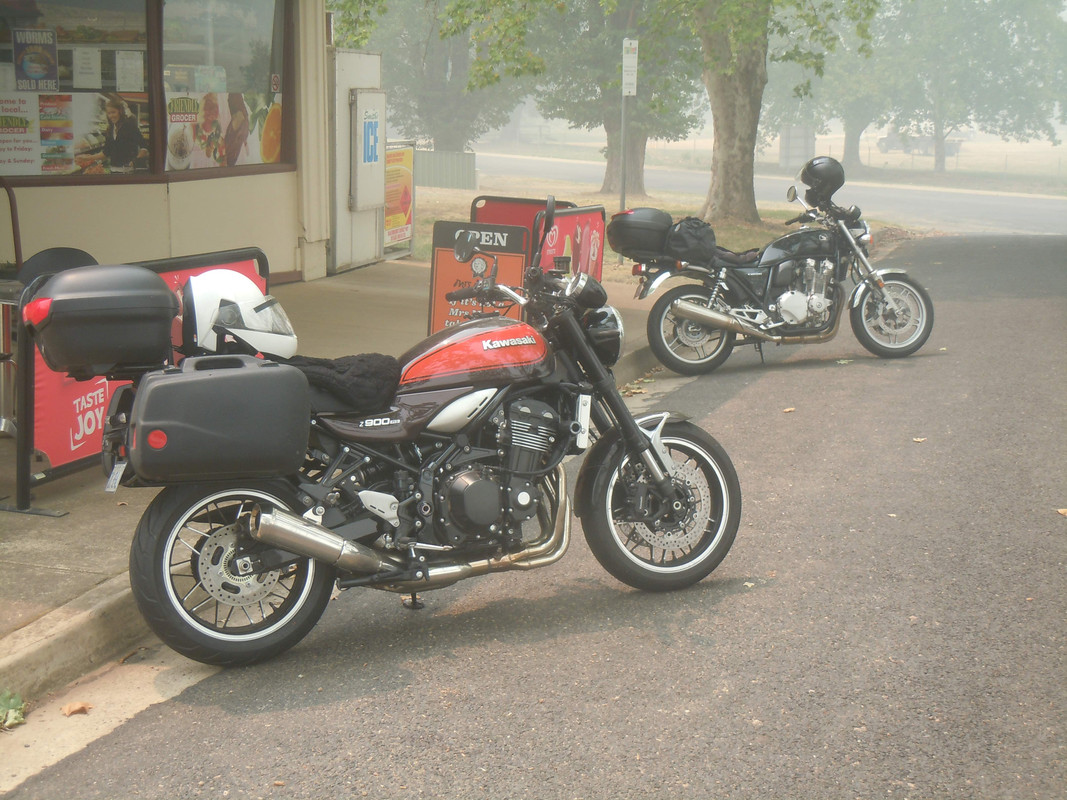
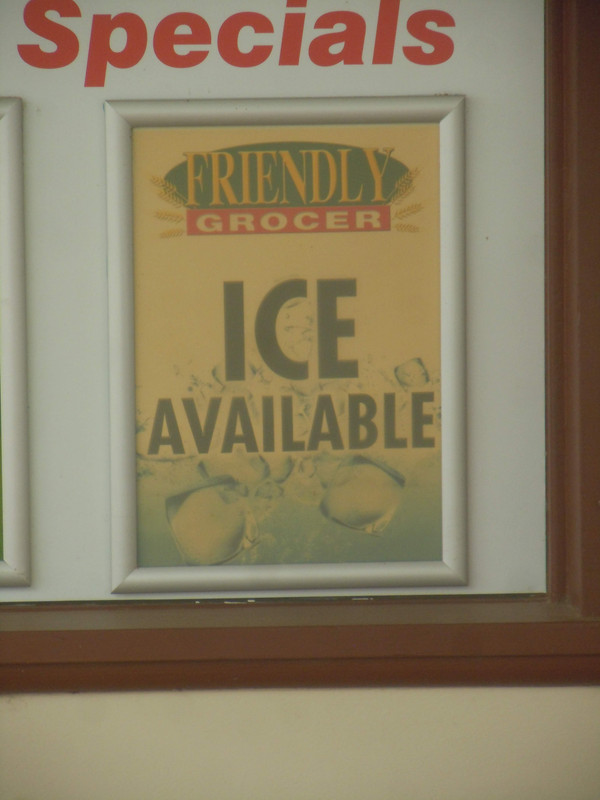
Perhaps it reflects an odd sense of humour, but I'm not sure a 'friendly' grocer would sell ice.
The smoke continued as I climbed through Tumbarumba and Batlow, which had been badly affected by the fire. By Tumut the smoke was clearing a bit and, by the time I made my way to the roadhouse north of Gundagai, it was clear and hot. I stopped to eat and have coffee before enduring a stretch on the highway to Jugiong.
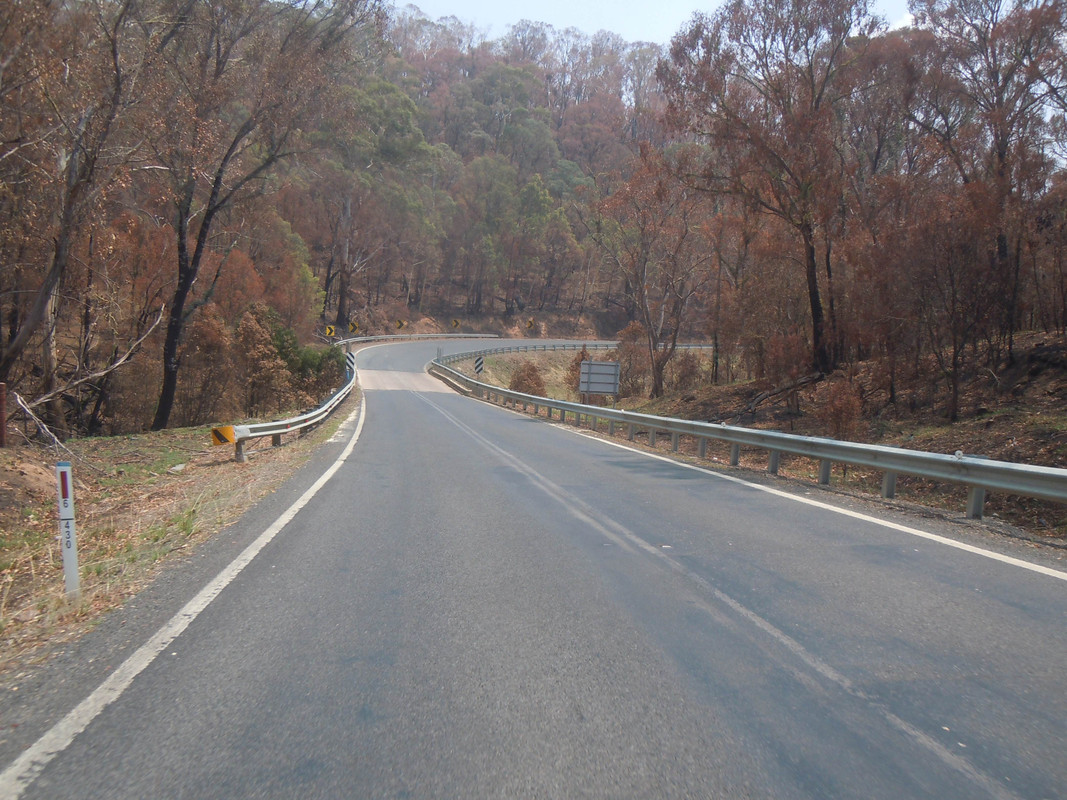
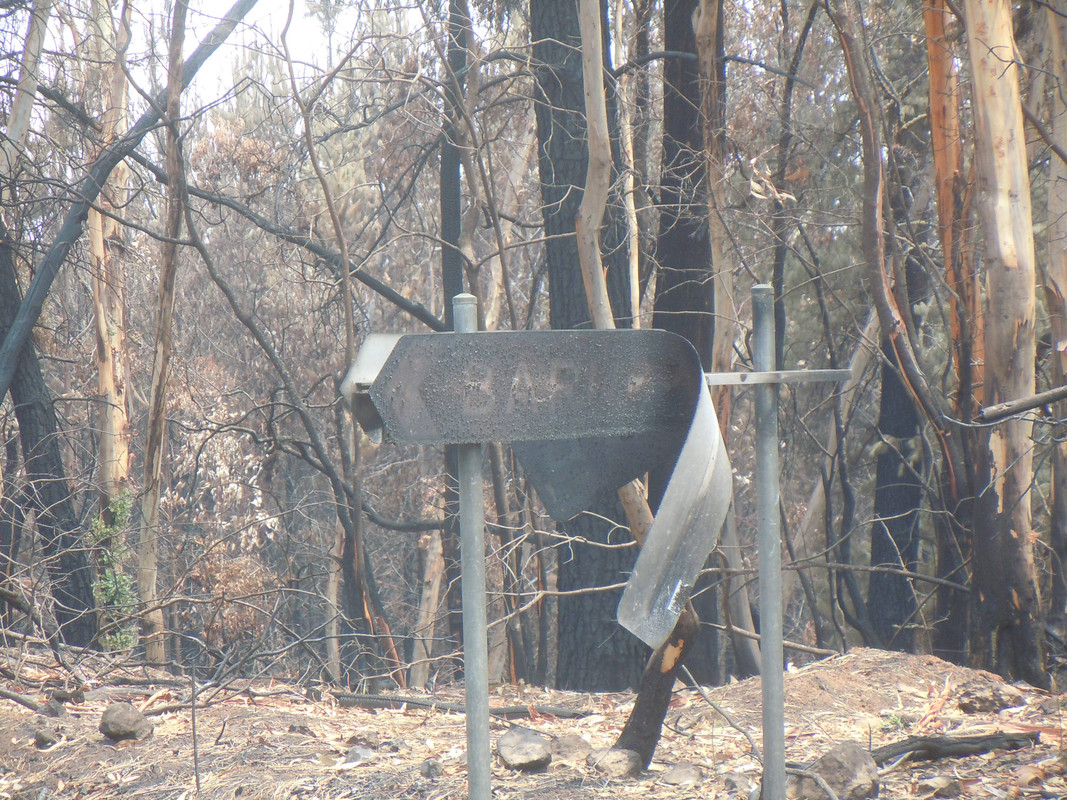
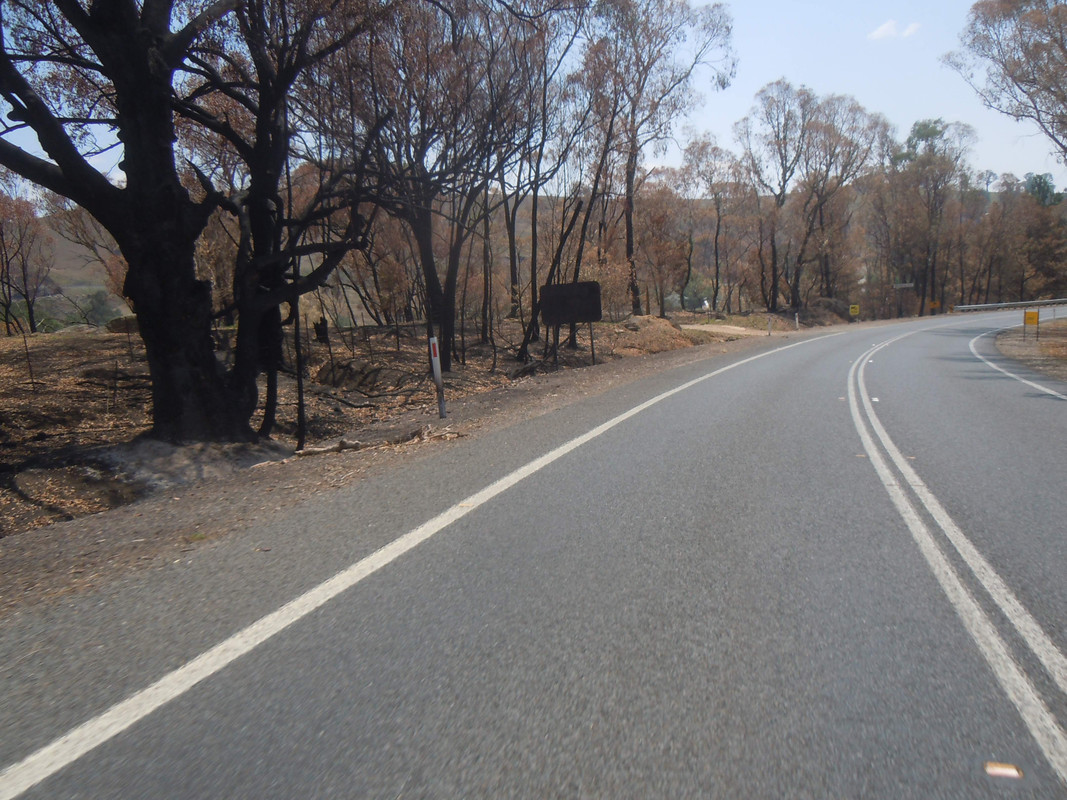
The aftermath of fires around Batlow
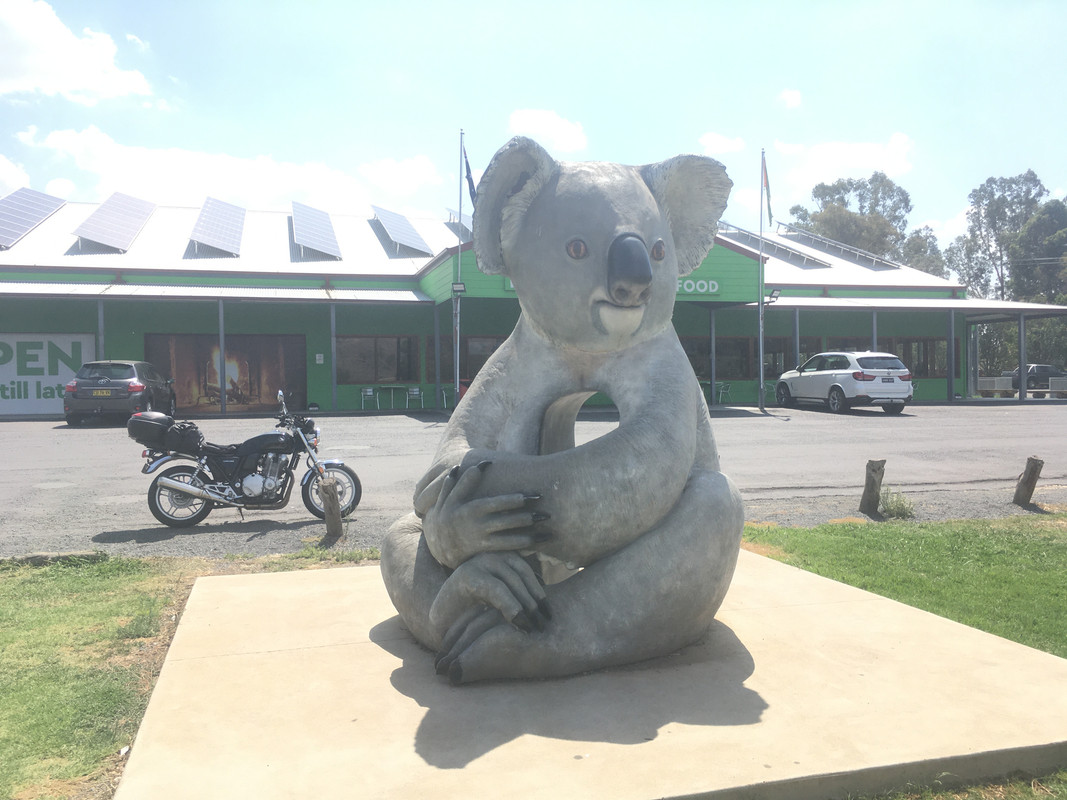
A large koala at the Gundagai service centre. People stand inside it and have their picture taken. Why for god's sake?
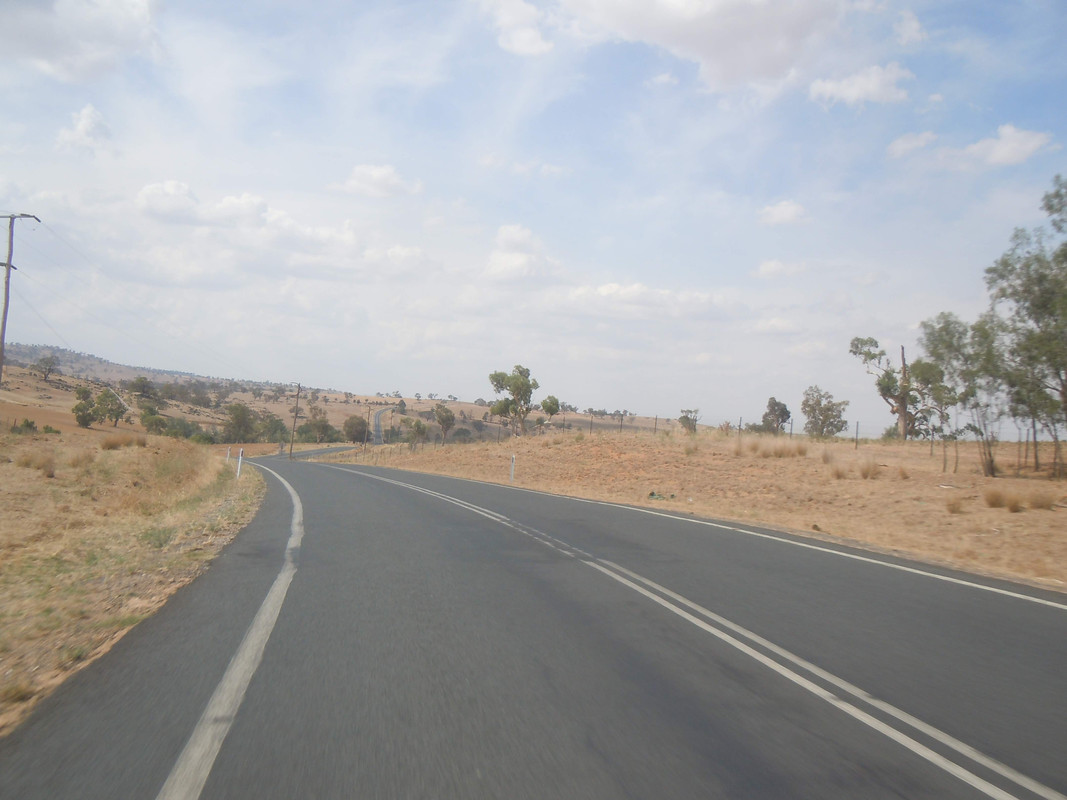
A section of the lovely road from Jugiong to Harden
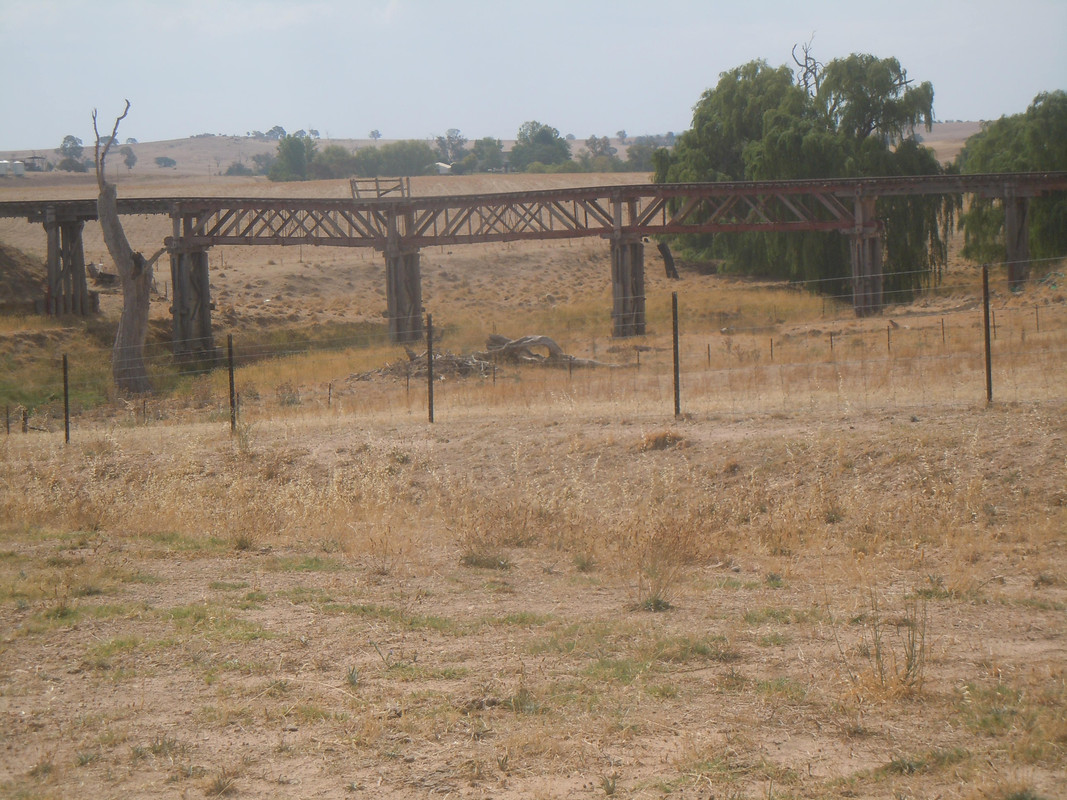
Old railway bridge outside Boorowa
From there I retraced Pterodactyl's and my steps to Boorowa where I had a cup of tea and refuelled before the final run to Cowra which I made on a road I'd not ridden before.
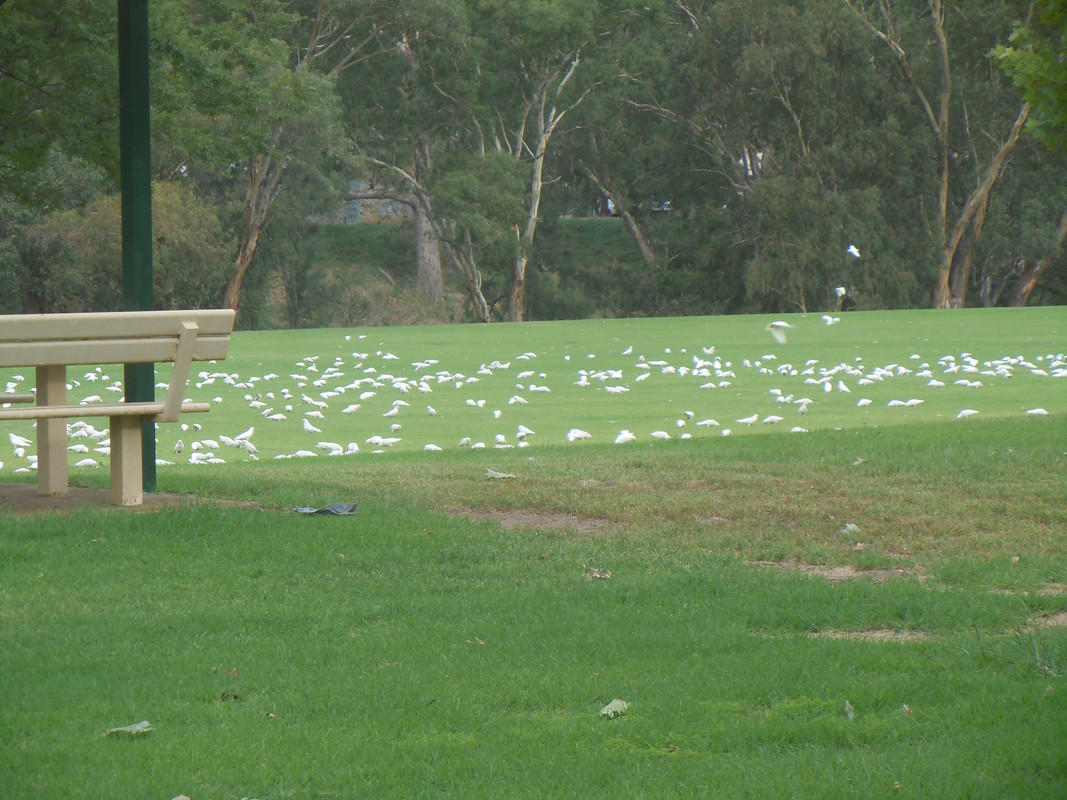
Sulphur-crested cockatoos on strangely green ground in Cowra
Cowra was home to a prisoner of war camp during World War 2. In August 1944 more than 500 Japanese prisoners attempted a mass breakout. Two hundred and thirty one Japanese prisoners and five Australians died during the breakout and subsequent recapture. Cowra still hosts a Japanese war cemetery and memorial Japanese garden.
